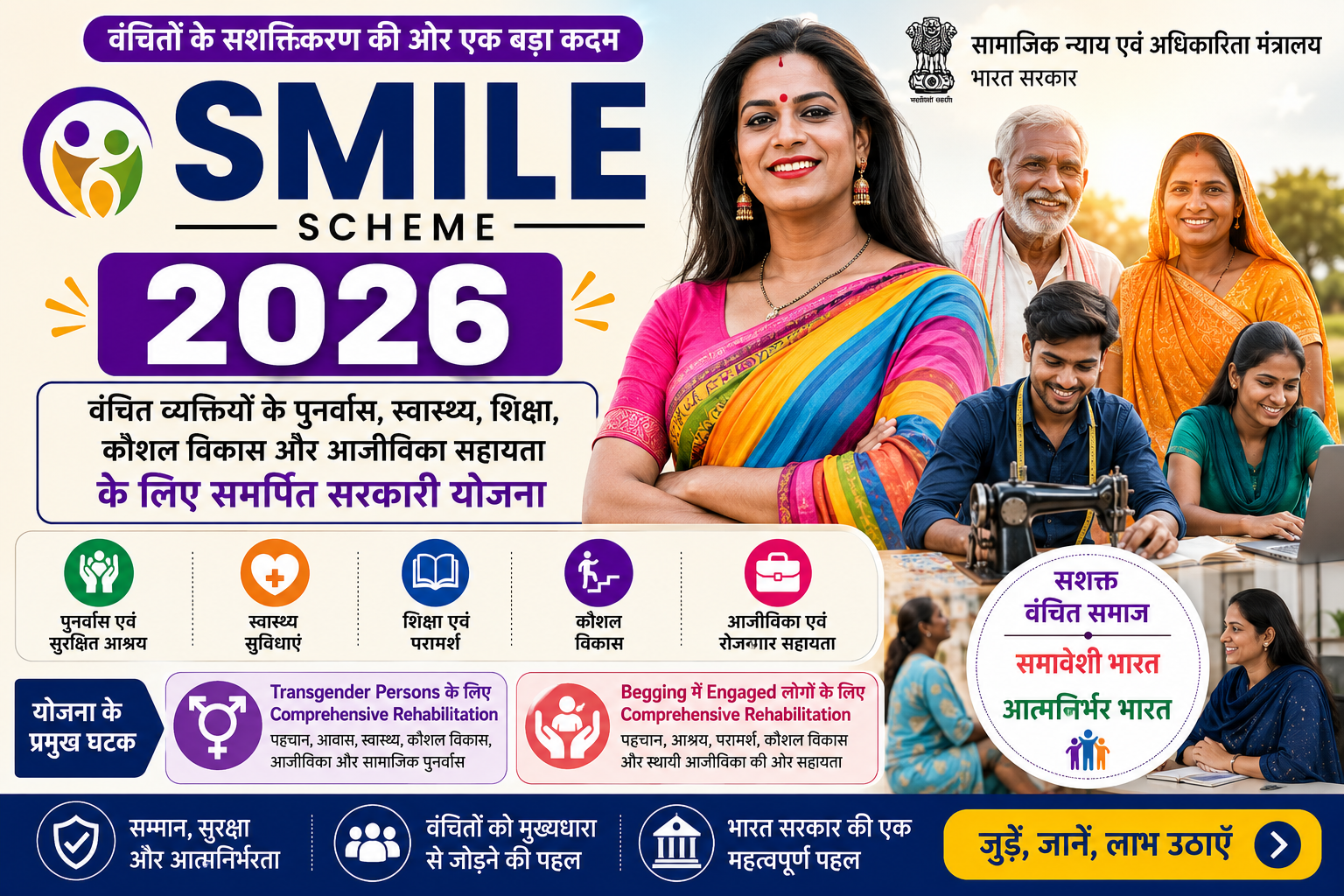
SMILE Scheme 2026 यानी Support for Marginalized Individuals for Livelihood and Enterprise भारत सरकार के सामाजिक न्याय एवं अधिकारिता मंत्रालय (Ministry of Social Justice and Empowerment) की एक umbrella scheme है। इसका उद्देश्य समाज के कुछ अत्यंत वंचित वर्गों को केवल तत्काल सहायता देना नहीं, बल्कि उन्हें पुनर्वास, स्वास्थ्य सुविधाओं, counselling, education, skill development और livelihood opportunities से जोड़कर अधिक आत्मनिर्भर बनाने में सहायता करना है।
सबसे महत्वपूर्ण बात यह है कि SMILE को केवल एक सामान्य “पैसे देने वाली योजना” समझना सही नहीं है। यह एक comprehensive rehabilitation और social empowerment framework है, जिसमें अलग-अलग target groups के लिए अलग sub-schemes शामिल हैं।
भारत सरकार की वर्तमान official scheme page के अनुसार SMILE के अंतर्गत दो प्रमुख sub-schemes हैं:
- Central Sector Scheme for Comprehensive Rehabilitation for Welfare of Transgender Persons
- Central Sector Scheme for Comprehensive Rehabilitation of Persons Engaged in the Act of Begging
2026 में SMILE Scheme के लिए revised guidelines भी उपलब्ध हैं। Ministry की official website पर 10 जून 2025 से प्रभावी 2nd Revision वाली guidelines को 31 मार्च 2028 तक active दिखाया गया है।
SMILE Scheme क्या है?
SMILE का पूरा नाम है:
Support for Marginalized Individuals for Livelihood and Enterprise
हिंदी में इसे लगभग वंचित व्यक्तियों के आजीविका एवं उद्यम के लिए सहायता के रूप में समझा जा सकता है।
यह योजना उन लोगों के rehabilitation और welfare पर focus करती है जो सामाजिक और आर्थिक रूप से अत्यंत vulnerable परिस्थितियों में हैं।
इसके अंतर्गत सरकार का focus केवल financial support तक सीमित नहीं है। इसमें आवश्यकता के अनुसार:
- Rehabilitation
- Medical facilities
- Counselling
- Education
- Skill development
- Livelihood support
- Economic linkages
- Shelter और basic services
जैसे interventions शामिल हो सकते हैं।
SMILE Scheme किस मंत्रालय की योजना है?
SMILE Scheme को Ministry of Social Justice and Empowerment, Government of India ने तैयार किया है।
इस योजना को लागू करने में केंद्र के साथ-साथ State Governments/UTs, District Administration, Urban Local Bodies, NGOs, Community Based Organizations और अन्य संस्थाओं की भूमिका हो सकती है।
इसका मतलब यह है कि beneficiary तक सहायता पहुंचाने की प्रक्रिया केवल एक central online form तक सीमित नहीं है। Ground-level implementation में स्थानीय प्रशासन और partner organizations की भी महत्वपूर्ण भूमिका रहती है।
SMILE Scheme में किन लोगों को शामिल किया गया है?
SMILE के दो मुख्य components हैं और दोनों के target groups अलग हैं।
1. Transgender Persons के लिए
इस component का उद्देश्य transgender persons के welfare और comprehensive rehabilitation को support करना है।
इसके अंतर्गत विभिन्न प्रकार की सहायता और services पर focus किया जाता है, जैसे:
- Skill development
- Livelihood opportunities
- Medical health facilities
- Counselling
- Safe shelter
- Welfare support
- Government schemes से convergence
Ministry की जानकारी के अनुसार transgender component में Garima Greh जैसे safe shelter facilities भी शामिल हैं।
2. Persons Engaged in Begging के लिए
दूसरा component उन व्यक्तियों के comprehensive rehabilitation पर focus करता है जो begging में engaged हैं।
इसमें केवल उन्हें सड़क से हटाना उद्देश्य नहीं है, बल्कि उनकी स्थिति को समझकर identification, mobilization, shelter, basic services, counselling, education, skill development और sustainable livelihood से जोड़ने का प्रयास किया जाता है।
SMILE Scheme का मुख्य उद्देश्य क्या है?
SMILE का व्यापक उद्देश्य marginalized individuals को समाज की मुख्यधारा से जोड़ने और उनके जीवन में sustainable improvement लाने की दिशा में काम करना है।
इसके प्रमुख उद्देश्यों को इस तरह समझ सकते हैं:
1. Rehabilitation
ऐसे व्यक्तियों को rehabilitation support देना जो सामाजिक और आर्थिक रूप से vulnerable परिस्थितियों में हैं।
2. Healthcare
जरूरत के अनुसार medical facilities और health-related support उपलब्ध कराना।
3. Counselling
Beneficiaries को मानसिक, सामाजिक और व्यवहारिक स्तर पर counselling support उपलब्ध कराना।
4. Education
शिक्षा और learning opportunities से जोड़ना।
5. Skill Development
Beneficiaries को रोजगार या self-employment के लिए जरूरी skills विकसित करने में मदद करना।
6. Livelihood
Training के बाद sustainable livelihood और economic opportunities से जोड़ने पर focus करना।
7. Social Integration
लोगों को सम्मानजनक जीवन और समाज की मुख्यधारा से जोड़ने की दिशा में सहायता करना।
क्या SMILE Scheme में सीधे पैसे मिलते हैं?
यह बात बहुत ध्यान से समझना जरूरी है।
SMILE को ऐसी योजना नहीं समझना चाहिए जिसमें हर eligible व्यक्ति के bank account में एक fixed amount automatically भेज दिया जाता है।
यह मुख्य रूप से rehabilitation और welfare services पर आधारित umbrella scheme है।
अलग-अलग components और interventions के अनुसार सहायता का स्वरूप अलग हो सकता है—जैसे shelter, healthcare, counselling, education, skill training और livelihood/economic linkages।
इसलिए किसी भी article या social media post में बिना official guideline के कोई fixed “₹X की सरकारी सहायता” बताना सही नहीं होगा।
SMILE Scheme में Skill Development क्यों महत्वपूर्ण है?
किसी व्यक्ति को केवल तत्काल सहायता देने से उसकी long-term स्थिति हमेशा नहीं बदलती।
इसीलिए SMILE में skill development और livelihood को महत्वपूर्ण स्थान दिया गया है।
उदाहरण के लिए skill training के बाद beneficiary को employment या self-employment के अवसरों से जोड़ने की कोशिश की जा सकती है।
इसका उद्देश्य व्यक्ति को धीरे-धीरे आत्मनिर्भर और sustainable livelihood की ओर ले जाना है।
Begging Rehabilitation Component कैसे काम करता है?
Begging से जुड़े component में rehabilitation एक structured process के रूप में किया जाता है।
2026 की Ministry material के अनुसार इस component का implementation phased manner में किया जा रहा है और इसमें survey एवं identification, mobilization, shelter/basic services और skill development तथा welfare schemes के convergence के माध्यम से sustainable rehabilitation पर focus है।
इसका अर्थ है कि केवल पहचान करने के बाद प्रक्रिया समाप्त नहीं होती। व्यक्ति को आगे rehabilitation services और livelihood opportunities से जोड़ना भी महत्वपूर्ण हिस्सा है।
क्या SMILE Scheme पूरे भारत में लागू है?
SMILE की मूल guidelines के अनुसार scheme का implementation देशभर में किया जाना है।
Begging rehabilitation component का actual implementation phased manner में किया जा रहा है। अप्रैल 2026 के Ministry material में इसे 33 States/UTs के 195 selected cities में operational बताया गया है।
इसलिए “पूरे भारत में scheme है” और “हर शहर में हर service एक जैसी उपलब्ध है”—इन दोनों बातों को एक जैसा नहीं समझना चाहिए।
SMILE Scheme 2026 की Current Status
2026 में SMILE Scheme active है।
Ministry of Social Justice and Empowerment की official scheme page पर 10 जून 2025 से प्रभावी 2nd Revised Scheme Guidelines उपलब्ध हैं और उनका listed end date 31 मार्च 2028 है। Official page को 24 अगस्त 2026 को last updated भी दिखाया गया है।
इसलिए 2026 में SMILE Scheme पर जानकारी देते समय पुराने 2022 rules के बजाय latest revised guidelines को प्राथमिकता देना ज्यादा सही है।
क्या SMILE एक PM Yojana है?
नहीं।
यह एक महत्वपूर्ण distinction है।
SMILE Scheme भारत सरकार की scheme है, लेकिन इसका official नाम Pradhan Mantri SMILE Yojana नहीं है।
इसे Ministry of Social Justice and Empowerment की SMILE umbrella scheme के रूप में लिखना अधिक सही है।
इसलिए website article में इसे गलत तरीके से “PM SMILE Yojana” लिखने से बचना चाहिए।
SMILE Scheme का समाज पर क्या प्रभाव हो सकता है?
SMILE का approach केवल financial assistance देने के बजाय rehabilitation + health + education + skills + livelihood को एक साथ जोड़ने का है।
अगर कोई व्यक्ति लंबे समय से social या economic vulnerability में है, तो केवल एक बार की सहायता उसकी स्थिति को permanently बदलने के लिए पर्याप्त नहीं हो सकती।
इसीलिए इस तरह की comprehensive approach में व्यक्ति को:
पहचान → सहायता → स्वास्थ्य → counselling → education/skill → livelihood → rehabilitation
जैसे चरणों से आगे बढ़ाने का प्रयास किया जाता है।
आगे क्या जानेंगे?
SMILE Scheme के दो मुख्य भाग
SMILE को समझने के लिए इसके दोनों components को अलग-अलग समझना जरूरी है।
1. Transgender Persons के लिए Comprehensive Rehabilitation
इस component का उद्देश्य transgender persons को identity recognition, shelter, healthcare, education, skill development और livelihood opportunities जैसी सेवाओं से जोड़ना है।
इसके अंतर्गत Identity Certificate और ID Card, Garima Greh, healthcare, skill development तथा livelihood support जैसी सुविधाओं पर काम किया जाता है।
2. Persons Engaged in Begging के लिए Comprehensive Rehabilitation
इस component का focus उन व्यक्तियों की पहचान और comprehensive rehabilitation पर है जो begging में engaged हैं।
इसमें केवल immediate assistance देना ही उद्देश्य नहीं है। व्यक्ति को identification से लेकर shelter, basic services, counselling, education, skill development और sustainable livelihood से जोड़ने का प्रयास किया जाता है।
Transgender Persons के लिए SMILE में क्या सहायता मिलती है?
SMILE के transgender component में beneficiary को एक ही प्रकार की सहायता नहीं दी जाती। जरूरत के अनुसार अलग-अलग interventions उपलब्ध हो सकते हैं।
मुख्य areas हैं:
- Identity और certification
- Safe shelter
- Healthcare
- Counselling
- Education
- Skill development
- Livelihood support
- Government schemes से linkage
- Social rehabilitation
इसका उद्देश्य beneficiary को long-term social और economic empowerment की दिशा में आगे बढ़ाना है।
Identity Certificate और ID Card का महत्व
Transgender persons के लिए identity और certification scheme का महत्वपूर्ण entry point है।
Official material के अनुसार National Portal for Transgender Persons के माध्यम से Identity Certificate और ID Card की प्रक्रिया उपलब्ध है। District-level competent authority verification के बाद certificate और ID card जारी करती है। यह identity documentation आगे scheme की विभिन्न services से जुड़ने में मदद करता है।
इसलिए beneficiary के लिए सही identity documentation काफी महत्वपूर्ण है।
Garima Greh क्या है?
Garima Greh transgender persons के लिए safe shelter और rehabilitation से जुड़ी महत्वपूर्ण पहल है।
ऐसे transgender persons जो:
- बेघर हैं,
- परिवार से अलग हो चुके हैं,
- family rejection का सामना कर रहे हैं,
- या अन्य vulnerable परिस्थितियों में हैं,
उनके लिए सुरक्षित residential environment उपलब्ध कराने का उद्देश्य है।
Garima Greh को केवल रहने की जगह के रूप में नहीं समझना चाहिए। इसका उद्देश्य shelter के साथ rehabilitation और आगे बेहतर livelihood की दिशा में सहायता करना भी है।
Skill Development का क्या फायदा है?
SMILE का एक महत्वपूर्ण उद्देश्य beneficiaries को skills और livelihood opportunities से जोड़ना है।
Skill development के माध्यम से व्यक्ति को:
- रोजगार के लिए तैयार करना,
- self-employment की संभावना बढ़ाना,
- income-generating activities से जोड़ना,
- और आर्थिक रूप से अधिक independent बनने में मदद करना
जैसे उद्देश्यों पर काम किया जाता है।
इसलिए SMILE को केवल welfare assistance scheme की बजाय rehabilitation और empowerment based scheme के रूप में समझना ज्यादा सही है।
Begging में Engaged Persons के लिए Rehabilitation
SMILE का दूसरा बड़ा component उन व्यक्तियों के comprehensive rehabilitation पर केंद्रित है जो begging में engaged हैं।
सरकारी guidelines के अनुसार begging को कई बार destitution और extreme vulnerability से जुड़ी स्थिति के रूप में देखा जाता है। इसलिए rehabilitation approach में केवल व्यक्ति को उस स्थिति से निकालना पर्याप्त नहीं माना जाता; उसके पीछे मौजूद social और economic vulnerabilities को address करना भी जरूरी है।
Begging Rehabilitation में कौन-कौन से Steps होते हैं?
इस component को broadly इस तरह समझ सकते हैं:
Identification → Mobilization → Shelter/Basic Services → Counselling → Education/Skill Development → Livelihood → Sustainable Rehabilitation
यानी व्यक्ति की पहचान करने के बाद उसे आवश्यक support और rehabilitation services से जोड़ने का प्रयास किया जाता है।
2026 के Ministry material में survey और identification, mobilization, shelter/basic services तथा skill development और welfare schemes के convergence के माध्यम से sustainable rehabilitation पर जोर दिया गया है।
Survey और Identification क्या है?
सबसे पहले यह पता लगाना जरूरी होता है कि कौन लोग vulnerability और begging की स्थिति में हैं।
इसके लिए local authorities और implementing agencies द्वारा identification/survey activities की जा सकती हैं।
इसका उद्देश्य eligible और जरूरतमंद लोगों तक rehabilitation services पहुंचाना है।
Mobilization का क्या मतलब है?
Identification के बाद व्यक्ति को rehabilitation process में शामिल करने के लिए mobilization की जाती है।
इस चरण में beneficiary को उपलब्ध services, shelter और rehabilitation opportunities के बारे में समझाया जा सकता है और उसे आगे की सहायता से जोड़ा जाता है।
Shelter और Basic Services
Begging rehabilitation component में जरूरतमंद लोगों के लिए shelter और basic services भी महत्वपूर्ण हिस्सा हैं।
इसमें परिस्थितियों के अनुसार:
- रहने की सुविधा
- भोजन
- basic healthcare
- counselling
- आवश्यक welfare support
जैसी services उपलब्ध कराने का प्रयास किया जा सकता है।
हालांकि उपलब्ध सुविधा हर जगह एक जैसी हो, यह जरूरी नहीं है। Implementation local authorities और approved agencies के माध्यम से अलग-अलग locations में हो सकती है।
Education और Skill Development
अगर beneficiary की स्थिति के अनुसार जरूरत हो तो उसे education या skill development से जोड़ने का प्रयास किया जा सकता है।
इसका उद्देश्य व्यक्ति को long-term livelihood के लिए तैयार करना है।
उदाहरण के तौर पर skill training के बाद व्यक्ति को employment या self-employment opportunities से जोड़ने की दिशा में काम किया जा सकता है।
Livelihood Support
SMILE का सबसे महत्वपूर्ण long-term objective sustainable livelihood की ओर बढ़ना है।
अगर कोई व्यक्ति किसी कारण से लगातार economic vulnerability में है, तो केवल temporary assistance उसके लिए पर्याप्त नहीं हो सकती।
इसीलिए skill development, employment और अन्य welfare schemes के साथ convergence पर जोर दिया जाता है।
यह भी पढ़ें
PM-RKVY 2026
PMGKAY 2026
FAQ
1. SMILE Scheme 2026 क्या है?
SMILE Scheme यानी Support for Marginalized Individuals for Livelihood and Enterprise भारत सरकार के सामाजिक न्याय एवं अधिकारिता मंत्रालय की umbrella scheme है। इसका उद्देश्य वंचित लोगों को rehabilitation, healthcare, education, skill development और livelihood support से जोड़ना है।
2. SMILE Scheme का मुख्य उद्देश्य क्या है?
इसका मुख्य उद्देश्य marginalized individuals का rehabilitation, social inclusion और livelihood support करना है, ताकि वे सम्मानजनक और आत्मनिर्भर जीवन की ओर बढ़ सकें।
3. SMILE Scheme के कितने मुख्य Components हैं?
इसके दो प्रमुख components हैं—Transgender Persons के लिए Comprehensive Rehabilitation और Persons Engaged in the Act of Begging के लिए Comprehensive Rehabilitation।
4. क्या SMILE Scheme में सीधे पैसे मिलते हैं?
नहीं। SMILE सभी beneficiaries को कोई fixed cash amount देने वाली योजना नहीं है। इसमें rehabilitation, shelter, healthcare, counselling, education, skill development और livelihood जैसी सहायता प्रमुख हैं।
5. Transgender Persons के लिए SMILE में क्या सहायता मिलती है?
Transgender persons के लिए identity documentation, healthcare, counselling, shelter, education, skill development और livelihood support जैसी सुविधाओं पर focus किया जाता है।
6. Garima Greh क्या है?
Garima Greh transgender persons के लिए safe shelter और rehabilitation से जुड़ी पहल है। इसका उद्देश्य जरूरतमंद transgender persons को सुरक्षित रहने की सुविधा और rehabilitation support उपलब्ध कराना है।
7. Begging में Engaged लोगों के लिए SMILE में क्या सहायता मिलती है?
ऐसे लोगों की identification और mobilization के बाद shelter, basic services, counselling, education, skill development और sustainable livelihood से जोड़ने की दिशा में सहायता दी जाती है।
8. क्या SMILE Scheme में Healthcare की सुविधा है?
हाँ। Scheme के विभिन्न components में healthcare और medical support महत्वपूर्ण areas हैं। उपलब्ध सुविधाएं beneficiary और implementation arrangements के अनुसार अलग हो सकती हैं।
9. क्या SMILE Scheme में Skill Development मिलता है?
हाँ। Skill development का उद्देश्य beneficiaries को employment और self-employment के लिए तैयार करना तथा sustainable livelihood की ओर बढ़ाना है।
10. क्या SMILE Scheme में Government Job मिलती है?
नहीं। SMILE सरकारी नौकरी देने वाली योजना नहीं है। इसका उद्देश्य skill development और livelihood support के माध्यम से रोजगार या self-employment के अवसरों से जोड़ना है।
11. SMILE Scheme किस मंत्रालय के अंतर्गत आती है?
SMILE Scheme Ministry of Social Justice and Empowerment, Government of India के अंतर्गत आती है।
12. क्या SMILE एक PM Yojana है?
नहीं। इसका official नाम SMILE Scheme है। इसे “PM SMILE Yojana” कहना सही नहीं है।
13. क्या SMILE Scheme पूरे भारत में लागू है?
SMILE एक Central Sector Scheme है, लेकिन अलग-अलग components और services का ground-level implementation selected locations और implementing agencies के माध्यम से हो सकता है।
14. SMILE Scheme के लिए Online Apply कैसे करें?
SMILE के सभी benefits के लिए एक common application form नहीं है। अलग-अलग components के लिए संबंधित government portal, State/UT authority, District Administration या implementing agency के माध्यम से प्रक्रिया हो सकती है।
15. क्या SMILE Scheme में Fixed ₹10,000 या ₹50,000 की सहायता मिलती है?
नहीं। सभी beneficiaries के लिए कोई universal fixed ₹10,000 या ₹50,000 cash benefit निर्धारित नहीं है। सहायता संबंधित component और beneficiary की जरूरत के अनुसार हो सकती है।
16. Transgender Persons Identity Certificate कैसे प्राप्त करें?
Transgender persons के लिए National Portal for Transgender Persons के माध्यम से Identity Certificate और ID Card के लिए आवेदन की सुविधा उपलब्ध है।
17. क्या SMILE Scheme में Shelter की सुविधा मिलती है?
हाँ। Scheme के संबंधित components में vulnerable beneficiaries के लिए shelter और basic services उपलब्ध कराने का provision है। Transgender persons के लिए Garima Greh इसका प्रमुख उदाहरण है।
18. SMILE Scheme में कौन-कौन सी Agencies काम करती हैं?
Implementation में Central Government के साथ State Governments/UTs, District Administration, Urban Local Bodies, NGOs और Community Based Organisations जैसी agencies की भूमिका हो सकती है।
19. SMILE Scheme के नाम पर Fraud से कैसे बचें?
किसी अनजान व्यक्ति को OTP, UPI PIN, ATM PIN, CVV या banking password न दें। Government scheme के नाम पर कोई व्यक्ति पैसे मांगे तो पहले official government source से verification करें।
20. SMILE Scheme की Official Website कौन-सी है?
SMILE Scheme की official information Ministry of Social Justice and Empowerment की website पर उपलब्ध है।
Official Link
SMILE Scheme — Ministry of Social Justice & Empowerment